TSMC
TSMC
One Platform — Physical Security Information Management for TSMC's global fab operations. UX architecture, multi-tenant design system, and design leadership across six major modules and 100+ screens.

What began as a straightforward CCTV management interface for one of TSMC's fabrication facilities evolved into one of the most complex enterprise design challenges I've led — a unified Physical Security Information Management platform spanning multiple fabs, dozens of stakeholder groups, and a scope that expanded three times over the course of the engagement.
The Challenge
The Challenge
TSMC needed to consolidate their physical security operations — fragmented across legacy systems, manual processes, and disconnected monitoring tools — into a single platform. The initial brief covered CCTV management for one fab. Within months, the scope expanded to include a Control Center for real-time multi-site monitoring, a Status Center for system health tracking, Device Management for thousands of surveillance endpoints, Rule & Mission engines for automated security responses, a Permission Center with granular role-based access, and a comprehensive Report Dashboard.
Each expansion added new user roles, new workflows, and new integration requirements with existing infrastructure including Azure SSO, Grafana monitoring, and third-party camera systems. I had to architect a design system flexible enough to absorb these expansions without breaking — while the team was already building the first modules.
TSMC needed to consolidate their physical security operations — fragmented across legacy systems, manual processes, and disconnected monitoring tools — into a single platform. The initial brief covered CCTV management for one fab. Within months, the scope expanded to include a Control Center for real-time multi-site monitoring, a Status Center for system health tracking, Device Management for thousands of surveillance endpoints, Rule & Mission engines for automated security responses, a Permission Center with granular role-based access, and a comprehensive Report Dashboard.
Each expansion added new user roles, new workflows, and new integration requirements with existing infrastructure including Azure SSO, Grafana monitoring, and third-party camera systems. I had to architect a design system flexible enough to absorb these expansions without breaking — while the team was already building the first modules.
The Challenge
TSMC needed to consolidate their physical security operations — fragmented across legacy systems, manual processes, and disconnected monitoring tools — into a single platform. The initial brief covered CCTV management for one fab. Within months, the scope expanded to include a Control Center for real-time multi-site monitoring, a Status Center for system health tracking, Device Management for thousands of surveillance endpoints, Rule & Mission engines for automated security responses, a Permission Center with granular role-based access, and a comprehensive Report Dashboard.
Each expansion added new user roles, new workflows, and new integration requirements with existing infrastructure including Azure SSO, Grafana monitoring, and third-party camera systems. I had to architect a design system flexible enough to absorb these expansions without breaking — while the team was already building the first modules.
System Architecture
System Architecture
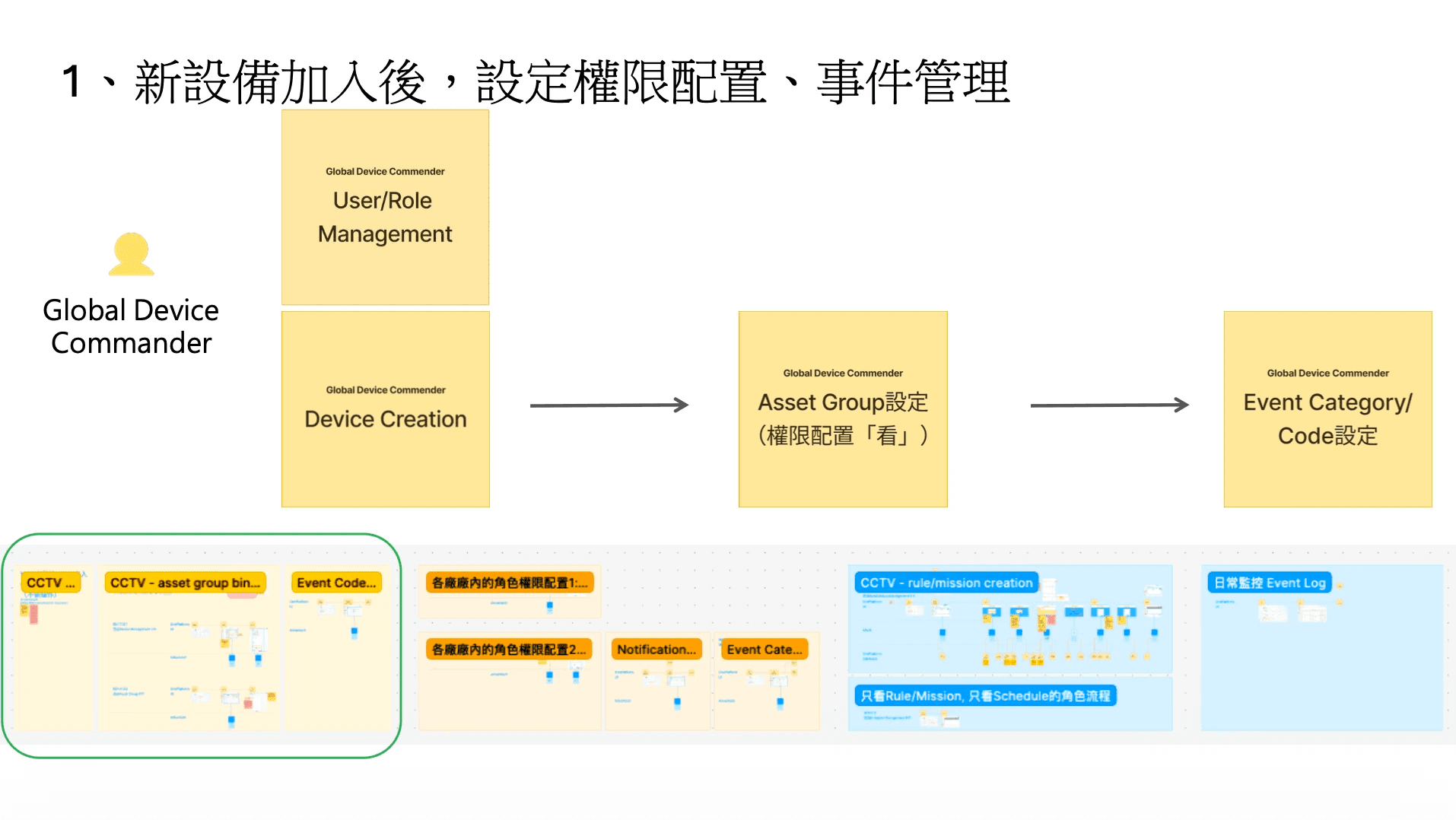
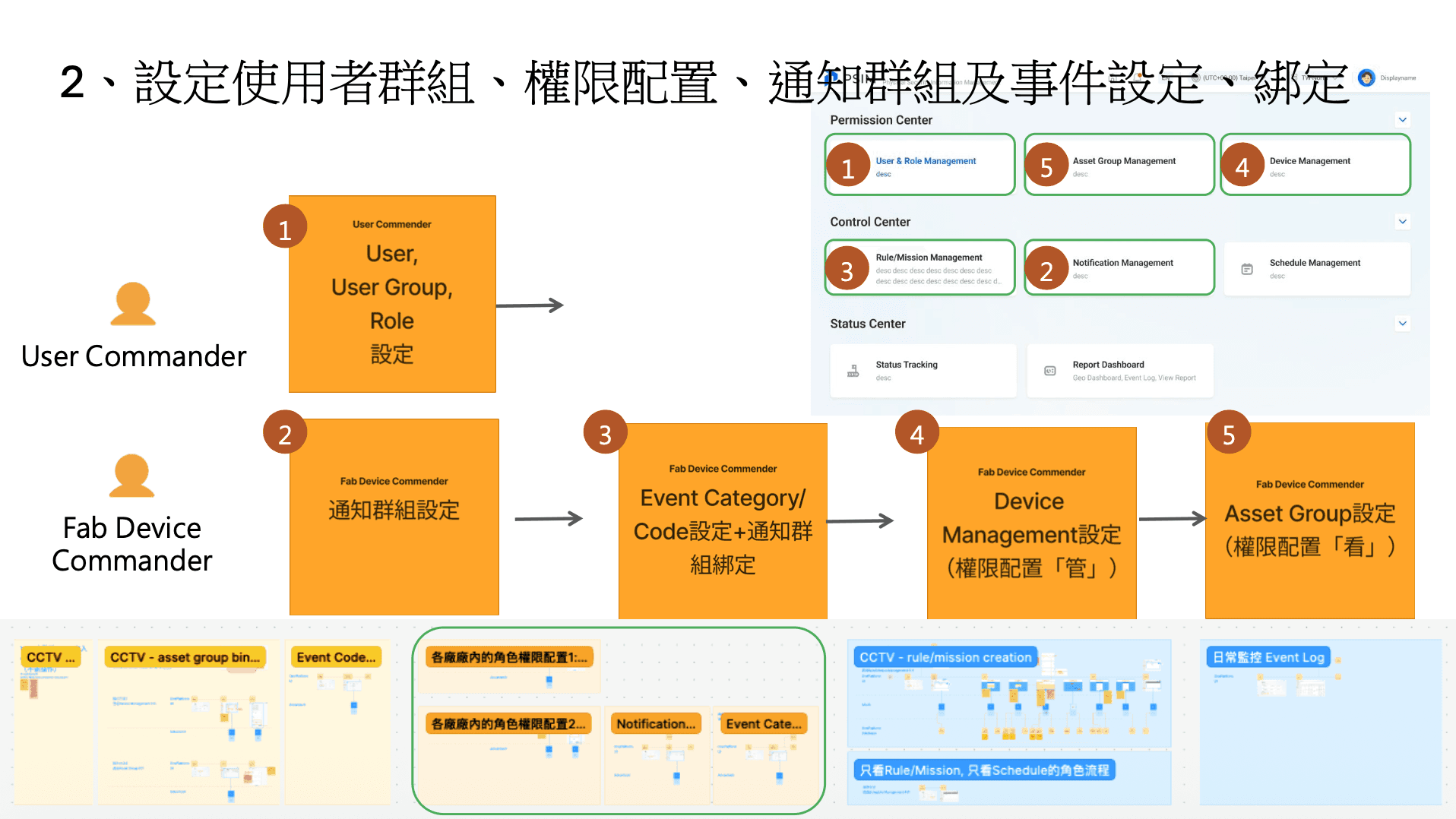
The architectural challenge was immense. Seven distinct user roles — Super Admin, IT Admin, Tenant Admin, Security Manager, Operator, Viewer, and Auditor — each needed tailored experiences within a unified interface. I mapped every role's permission matrix, workflow patterns, and information needs before touching a single pixel.
The platform's multi-tenant architecture meant that the same interface had to feel coherent whether you were an IT admin managing tenant provisioning across twelve fabs, or a night-shift operator monitoring 200 live feeds in a single control room. I designed a modular navigation system that progressively revealed complexity based on role permissions, keeping the interface clean for operators while giving admins full system access.
The design framework had to accommodate TSMC's stringent security requirements — every interaction was documented with role-permission mapping, and the component library was structured so vendor teams in Taiwan could extend the system without deviating from the established patterns.
The architectural challenge was immense. Seven distinct user roles — Super Admin, IT Admin, Tenant Admin, Security Manager, Operator, Viewer, and Auditor — each needed tailored experiences within a unified interface. I mapped every role's permission matrix, workflow patterns, and information needs before touching a single pixel.
The platform's multi-tenant architecture meant that the same interface had to feel coherent whether you were an IT admin managing tenant provisioning across twelve fabs, or a night-shift operator monitoring 200 live feeds in a single control room. I designed a modular navigation system that progressively revealed complexity based on role permissions, keeping the interface clean for operators while giving admins full system access.
The design framework had to accommodate TSMC's stringent security requirements — every interaction was documented with role-permission mapping, and the component library was structured so vendor teams in Taiwan could extend the system without deviating from the established patterns.
System Architecture
The architectural challenge was immense. Seven distinct user roles — Super Admin, IT Admin, Tenant Admin, Security Manager, Operator, Viewer, and Auditor — each needed tailored experiences within a unified interface. I mapped every role's permission matrix, workflow patterns, and information needs before touching a single pixel.
The platform's multi-tenant architecture meant that the same interface had to feel coherent whether you were an IT admin managing tenant provisioning across twelve fabs, or a night-shift operator monitoring 200 live feeds in a single control room. I designed a modular navigation system that progressively revealed complexity based on role permissions, keeping the interface clean for operators while giving admins full system access.
The design framework had to accommodate TSMC's stringent security requirements — every interaction was documented with role-permission mapping, and the component library was structured so vendor teams in Taiwan could extend the system without deviating from the established patterns.
Leading Through Complexity
Leading Through Complexity
This project tested my leadership as much as my design skills. I was managing the design direction while coordinating with our development team, external vendor teams in Taiwan, and TSMC's internal stakeholders — each with different expectations, timelines, and working languages.
When the scope expanded for the third time to include Report Dashboard and Mission Management modules, I had to make a case for additional design resources while simultaneously delivering on existing commitments. Taiwan's deadlines were non-negotiable — TSMC operates on semiconductor-industry timelines where delays cascade into millions in operational risk.
I established a design review cadence that kept all parties aligned, created detailed handoff documentation that bridged the gap between our team and the Taiwanese vendors, and built a component library robust enough that new modules could be assembled from existing patterns in days rather than weeks.
This project tested my leadership as much as my design skills. I was managing the design direction while coordinating with our development team, external vendor teams in Taiwan, and TSMC's internal stakeholders — each with different expectations, timelines, and working languages.
When the scope expanded for the third time to include Report Dashboard and Mission Management modules, I had to make a case for additional design resources while simultaneously delivering on existing commitments. Taiwan's deadlines were non-negotiable — TSMC operates on semiconductor-industry timelines where delays cascade into millions in operational risk.
I established a design review cadence that kept all parties aligned, created detailed handoff documentation that bridged the gap between our team and the Taiwanese vendors, and built a component library robust enough that new modules could be assembled from existing patterns in days rather than weeks.
Leading Through Complexity
This project tested my leadership as much as my design skills. I was managing the design direction while coordinating with our development team, external vendor teams in Taiwan, and TSMC's internal stakeholders — each with different expectations, timelines, and working languages.
When the scope expanded for the third time to include Report Dashboard and Mission Management modules, I had to make a case for additional design resources while simultaneously delivering on existing commitments. Taiwan's deadlines were non-negotiable — TSMC operates on semiconductor-industry timelines where delays cascade into millions in operational risk.
I established a design review cadence that kept all parties aligned, created detailed handoff documentation that bridged the gap between our team and the Taiwanese vendors, and built a component library robust enough that new modules could be assembled from existing patterns in days rather than weeks.
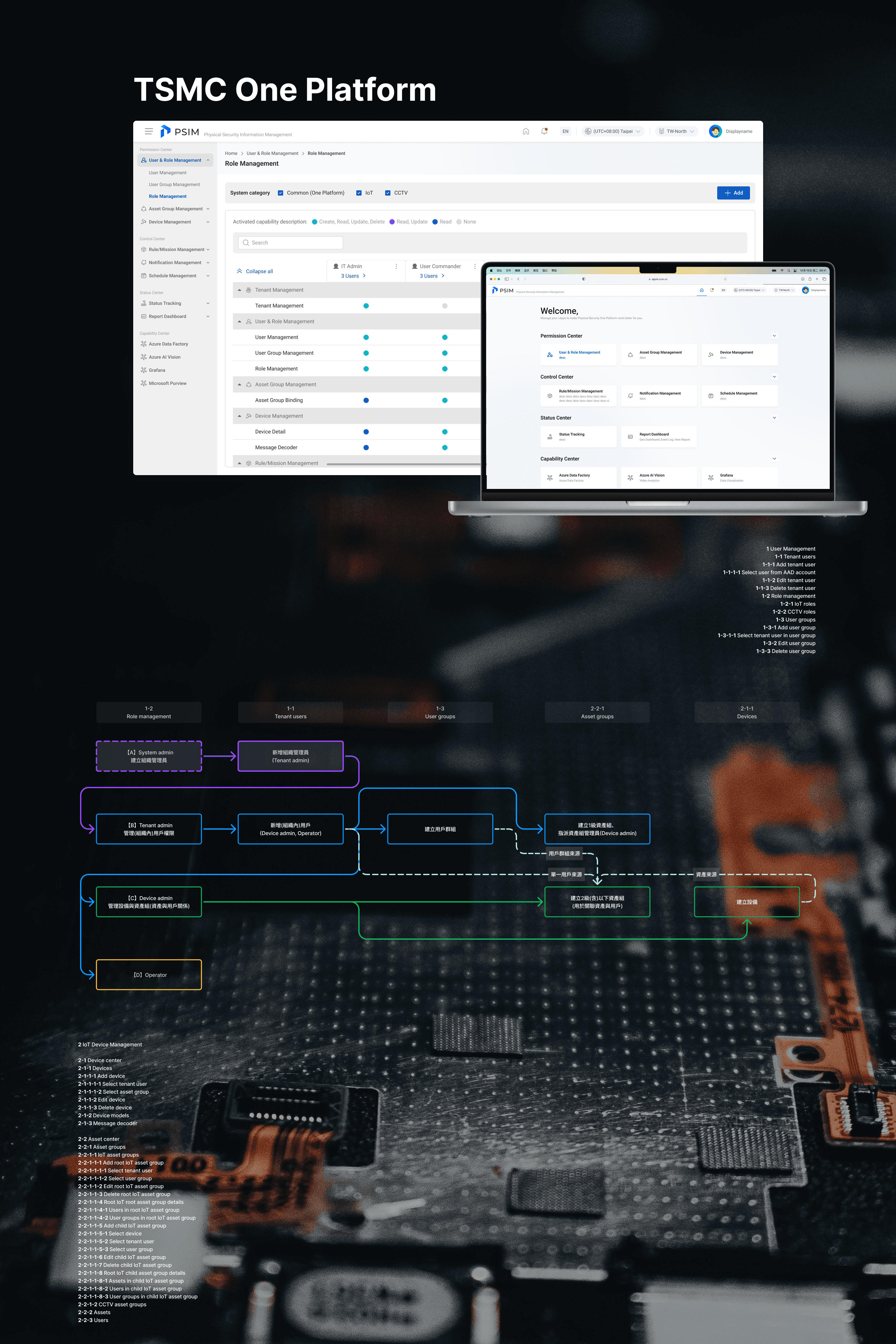
As Design Lead, I architected the UX foundation for a system that needed to serve seven distinct user roles — from IT administrators provisioning multi-tenant environments to security operators responding to real-time incidents across hundreds of camera feeds. Every design decision rippled across the entire platform.
The pressure was constant. Tight deadlines from TSMC's Taiwan headquarters, a scope that kept outpacing resourcing, multiple vendor teams to coordinate, and the weight of knowing that this platform would protect the facilities producing the world's most advanced semiconductors.
Impact
Impact
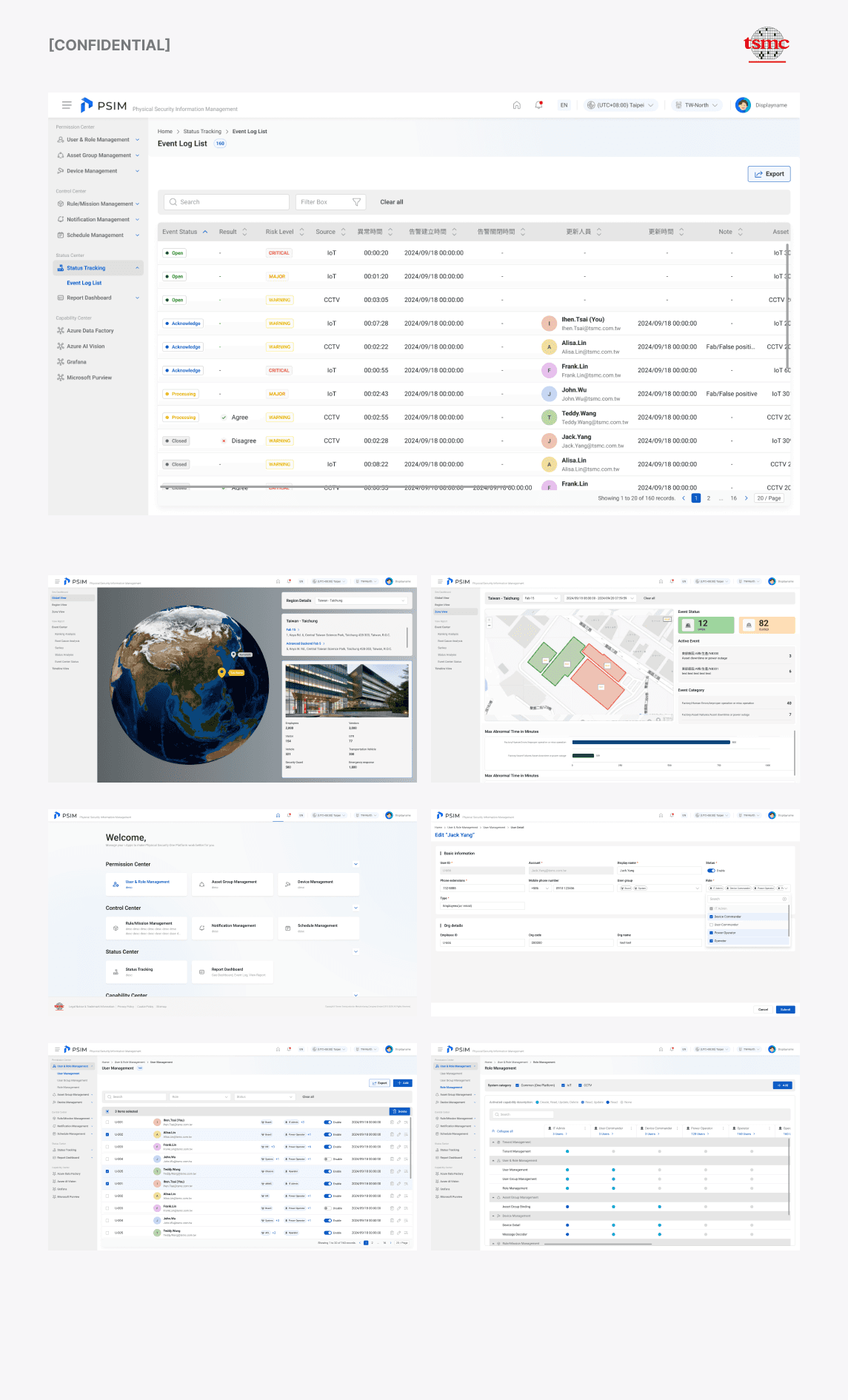
Over the course of the engagement, I designed 100+ screens spanning six major platform modules, established a scalable design system that enabled multiple vendor teams to build consistently, and led design delivery through three major scope expansions.
The platform I architected now manages physical security across TSMC's fabrication facilities — the same facilities producing the chips that power the world's most advanced technology. The UX framework I established became the foundation for continued development, allowing TSMC to onboard additional vendor teams while maintaining the design integrity and usability standards I set from day one.
Over the course of the engagement, I designed 100+ screens spanning six major platform modules, established a scalable design system that enabled multiple vendor teams to build consistently, and led design delivery through three major scope expansions.
The platform I architected now manages physical security across TSMC's fabrication facilities — the same facilities producing the chips that power the world's most advanced technology. The UX framework I established became the foundation for continued development, allowing TSMC to onboard additional vendor teams while maintaining the design integrity and usability standards I set from day one.
Impact
Over the course of the engagement, I designed 100+ screens spanning six major platform modules, established a scalable design system that enabled multiple vendor teams to build consistently, and led design delivery through three major scope expansions.
The platform I architected now manages physical security across TSMC's fabrication facilities — the same facilities producing the chips that power the world's most advanced technology. The UX framework I established became the foundation for continued development, allowing TSMC to onboard additional vendor teams while maintaining the design integrity and usability standards I set from day one.


©2026 SIQI LIU
Go Back To Top
©2026 SIQI LIU
Go Back To Top