FORD CHINA
FORD CHINA
Redwood 2.0 In-Vehicle Infotainment Platform — UI component library, motion design system, and interactive ProtoPie prototypes across five screen configurations, two brands, and dual themes. On-site design delivery at Ford's Shanghai and Nanjing studios.
Involvement
Senior UI Designer, Creative Visual Direction, ProtoPie Prototyping
Date
2024
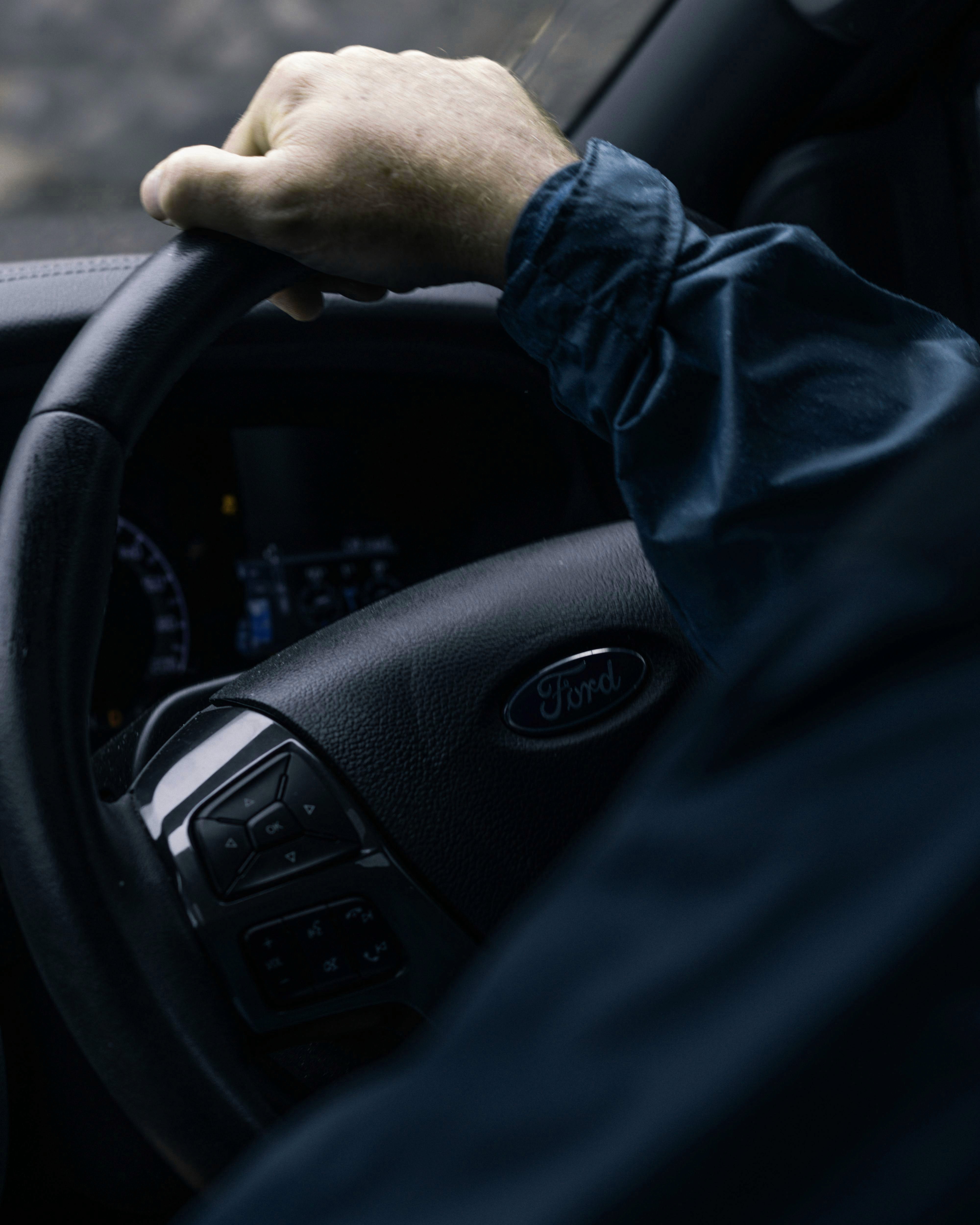
Ford China's Redwood 2.0 was not a single screen or a single feature — it was the complete digital cockpit platform for Ford's next generation of vehicles. Five screen configurations ranging from an 8-inch cluster to a 27-inch landscape IVI, two brands (Ford and Lincoln), dark and light themes, and a token-driven component system that needed to adapt flawlessly across every permutation.
The Brief
The Brief
Ford's Redwood 2.0 platform was their most ambitious infotainment architecture to date. The system spanned five distinct hardware configurations: a 12.3″ cluster paired with a 27″ landscape IVI, an 8.88″ cluster with a 15.6″ IVI, an 8″ cluster with a 13.2″ IVI, dual 15.4″ landscape screens, and a 12.3″ cluster with a 12.1″ portrait IVI. Each configuration had unique layout constraints, touch target requirements, and information density needs.
The platform needed to serve both Ford and Lincoln brand expressions — distinct visual identities sharing a common interaction framework. On top of that, full dark and light theme support was required, with every component adapting its typography, color, radius, and spacing through a token system. My role: define the visual language that could hold all of this together without breaking.
Ford's Redwood 2.0 platform was their most ambitious infotainment architecture to date. The system spanned five distinct hardware configurations: a 12.3″ cluster paired with a 27″ landscape IVI, an 8.88″ cluster with a 15.6″ IVI, an 8″ cluster with a 13.2″ IVI, dual 15.4″ landscape screens, and a 12.3″ cluster with a 12.1″ portrait IVI. Each configuration had unique layout constraints, touch target requirements, and information density needs.
The platform needed to serve both Ford and Lincoln brand expressions — distinct visual identities sharing a common interaction framework. On top of that, full dark and light theme support was required, with every component adapting its typography, color, radius, and spacing through a token system. My role: define the visual language that could hold all of this together without breaking.
The Brief
Ford's Redwood 2.0 platform was their most ambitious infotainment architecture to date. The system spanned five distinct hardware configurations: a 12.3″ cluster paired with a 27″ landscape IVI, an 8.88″ cluster with a 15.6″ IVI, an 8″ cluster with a 13.2″ IVI, dual 15.4″ landscape screens, and a 12.3″ cluster with a 12.1″ portrait IVI. Each configuration had unique layout constraints, touch target requirements, and information density needs.
The platform needed to serve both Ford and Lincoln brand expressions — distinct visual identities sharing a common interaction framework. On top of that, full dark and light theme support was required, with every component adapting its typography, color, radius, and spacing through a token system. My role: define the visual language that could hold all of this together without breaking.
Visual Exploration
Visual Exploration
This is where the real craft happened. I developed three complete visual directions for the music module — each with its own typographic system, color logic, and motion language — as a proving ground for the broader platform aesthetic.
The first leaned into dark-mode immersion with deep gradients and layered blur effects. Beautiful in isolation, but it disappeared against the car's dark interior and competed with the ambient lighting. The second pushed a high-contrast editorial approach — bold type, stark layouts, clinical precision. It tested well for readability in daylight but felt cold, more like an aircraft control panel than an experience you'd want to live with.
The third direction found the sweet spot: a layered system using ambient color extraction from album artwork, paired with a restrained typographic hierarchy that maintained legibility across the 8-inch cluster and the 27-inch IVI alike. After presenting all three to Ford's design review board in Shanghai, direction three was unanimously approved — and its visual DNA became the foundation for every component across the entire Redwood 2.0 platform.
This is where the real craft happened. I developed three complete visual directions for the music module — each with its own typographic system, color logic, and motion language — as a proving ground for the broader platform aesthetic.
The first leaned into dark-mode immersion with deep gradients and layered blur effects. Beautiful in isolation, but it disappeared against the car's dark interior and competed with the ambient lighting. The second pushed a high-contrast editorial approach — bold type, stark layouts, clinical precision. It tested well for readability in daylight but felt cold, more like an aircraft control panel than an experience you'd want to live with.
The third direction found the sweet spot: a layered system using ambient color extraction from album artwork, paired with a restrained typographic hierarchy that maintained legibility across the 8-inch cluster and the 27-inch IVI alike. After presenting all three to Ford's design review board in Shanghai, direction three was unanimously approved — and its visual DNA became the foundation for every component across the entire Redwood 2.0 platform.
Visual Exploration
This is where the real craft happened. I developed three complete visual directions for the music module — each with its own typographic system, color logic, and motion language — as a proving ground for the broader platform aesthetic.
The first leaned into dark-mode immersion with deep gradients and layered blur effects. Beautiful in isolation, but it disappeared against the car's dark interior and competed with the ambient lighting. The second pushed a high-contrast editorial approach — bold type, stark layouts, clinical precision. It tested well for readability in daylight but felt cold, more like an aircraft control panel than an experience you'd want to live with.
The third direction found the sweet spot: a layered system using ambient color extraction from album artwork, paired with a restrained typographic hierarchy that maintained legibility across the 8-inch cluster and the 27-inch IVI alike. After presenting all three to Ford's design review board in Shanghai, direction three was unanimously approved — and its visual DNA became the foundation for every component across the entire Redwood 2.0 platform.
The System
The System
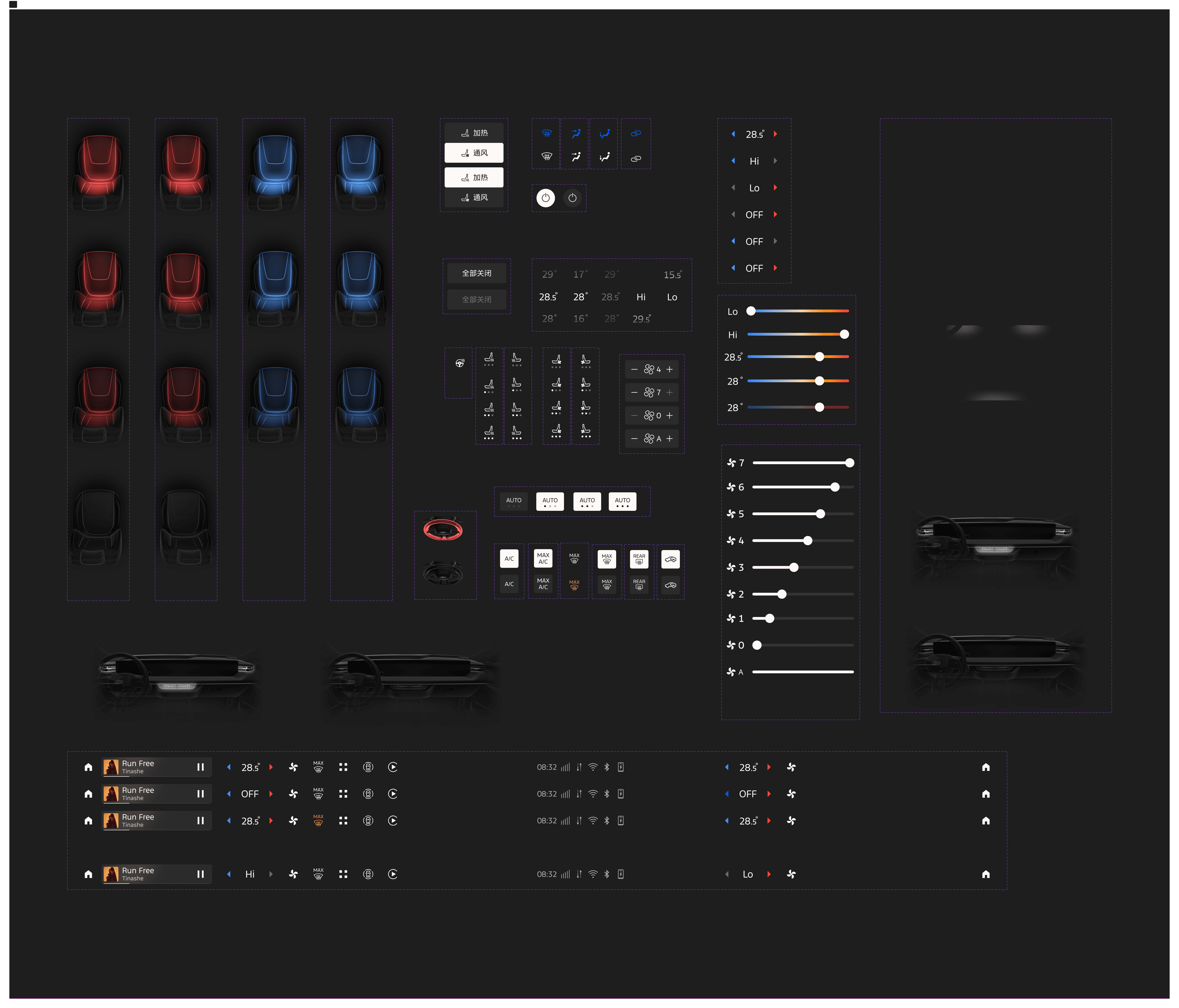
With the visual direction locked, I built a token-driven component library designed to scale across every permutation of the platform. The token architecture controlled everything: brand tokens (Ford vs. Lincoln), screen-size tokens (five configurations), theme tokens (dark vs. light), and component-level tokens for class, state, and configurability — Primary/Secondary, Default/Pressed/Selected/Disabled, with optional button and icon slots.
Each component needed to auto-adapt in Figma, displaying the correct styling when any combination of brand, screen size, or theme changed. I built the icon library, defined the typography scale across Chinese and English bilingual layouts, established the motion specification with timing curves and transition logic, and documented the entire system in both languages for Ford's global teams.
The deliverables were structured in Figma source files with accompanying PNG slice descriptions and MP4 motion references — five complete component libraries, one per screen configuration, plus a unified UE interaction specification covering global navigation patterns, touch hot-zone recommendations, and ergo compliance rules for in-vehicle use.
With the visual direction locked, I built a token-driven component library designed to scale across every permutation of the platform. The token architecture controlled everything: brand tokens (Ford vs. Lincoln), screen-size tokens (five configurations), theme tokens (dark vs. light), and component-level tokens for class, state, and configurability — Primary/Secondary, Default/Pressed/Selected/Disabled, with optional button and icon slots.
Each component needed to auto-adapt in Figma, displaying the correct styling when any combination of brand, screen size, or theme changed. I built the icon library, defined the typography scale across Chinese and English bilingual layouts, established the motion specification with timing curves and transition logic, and documented the entire system in both languages for Ford's global teams.
The deliverables were structured in Figma source files with accompanying PNG slice descriptions and MP4 motion references — five complete component libraries, one per screen configuration, plus a unified UE interaction specification covering global navigation patterns, touch hot-zone recommendations, and ergo compliance rules for in-vehicle use.
The System
With the visual direction locked, I built a token-driven component library designed to scale across every permutation of the platform. The token architecture controlled everything: brand tokens (Ford vs. Lincoln), screen-size tokens (five configurations), theme tokens (dark vs. light), and component-level tokens for class, state, and configurability — Primary/Secondary, Default/Pressed/Selected/Disabled, with optional button and icon slots.
Each component needed to auto-adapt in Figma, displaying the correct styling when any combination of brand, screen size, or theme changed. I built the icon library, defined the typography scale across Chinese and English bilingual layouts, established the motion specification with timing curves and transition logic, and documented the entire system in both languages for Ford's global teams.
The deliverables were structured in Figma source files with accompanying PNG slice descriptions and MP4 motion references — five complete component libraries, one per screen configuration, plus a unified UE interaction specification covering global navigation patterns, touch hot-zone recommendations, and ergo compliance rules for in-vehicle use.
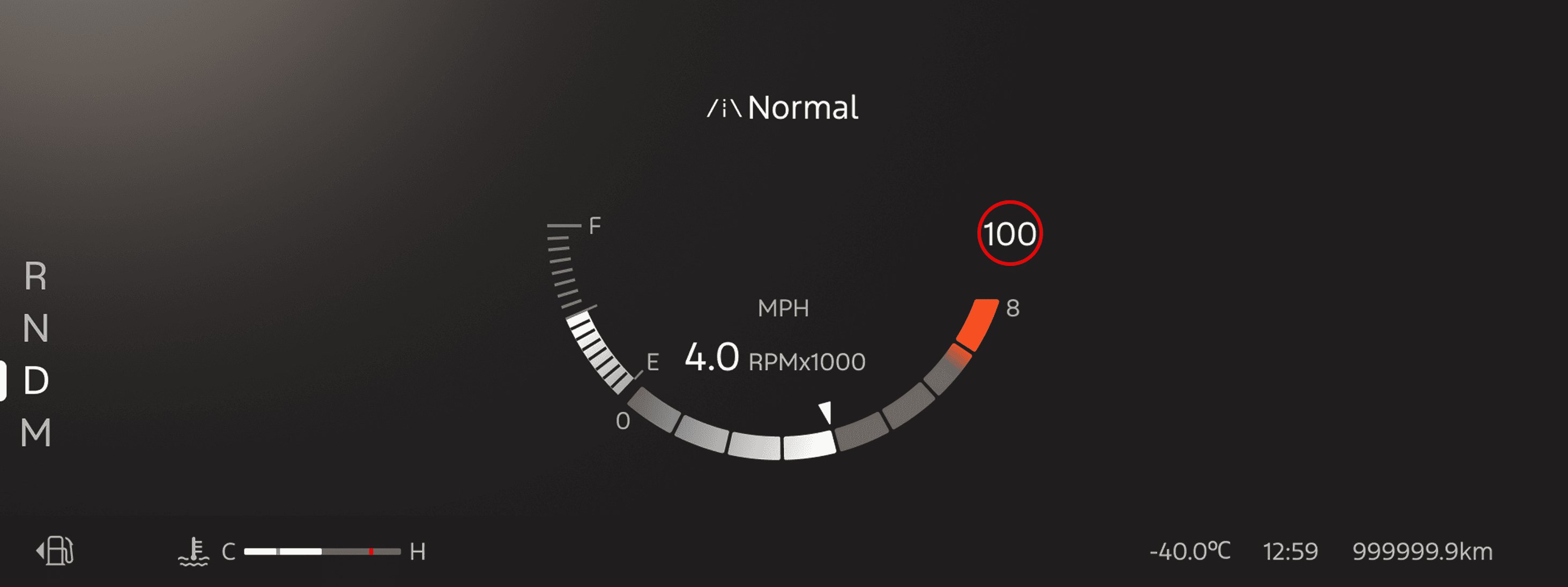
I was embedded on-site at Ford's Shanghai office as a senior UI designer responsible for the creative visual direction of the platform's component library. The scope started with the online music module, but quickly expanded to encompass the entire UI system — from Launcher to navigation, climate controls to instrument cluster, media playback to phone integration.
What made this project demanding wasn't just the breadth of screens — it was the depth of variation. Every component had to work across five screen sizes, two brand identities, two color themes, and dozens of interactive states. And every visual decision I made had to survive a ProtoPie prototype test where real users tried to adjust their seat heating at 120km/h.
Outcome
Outcome
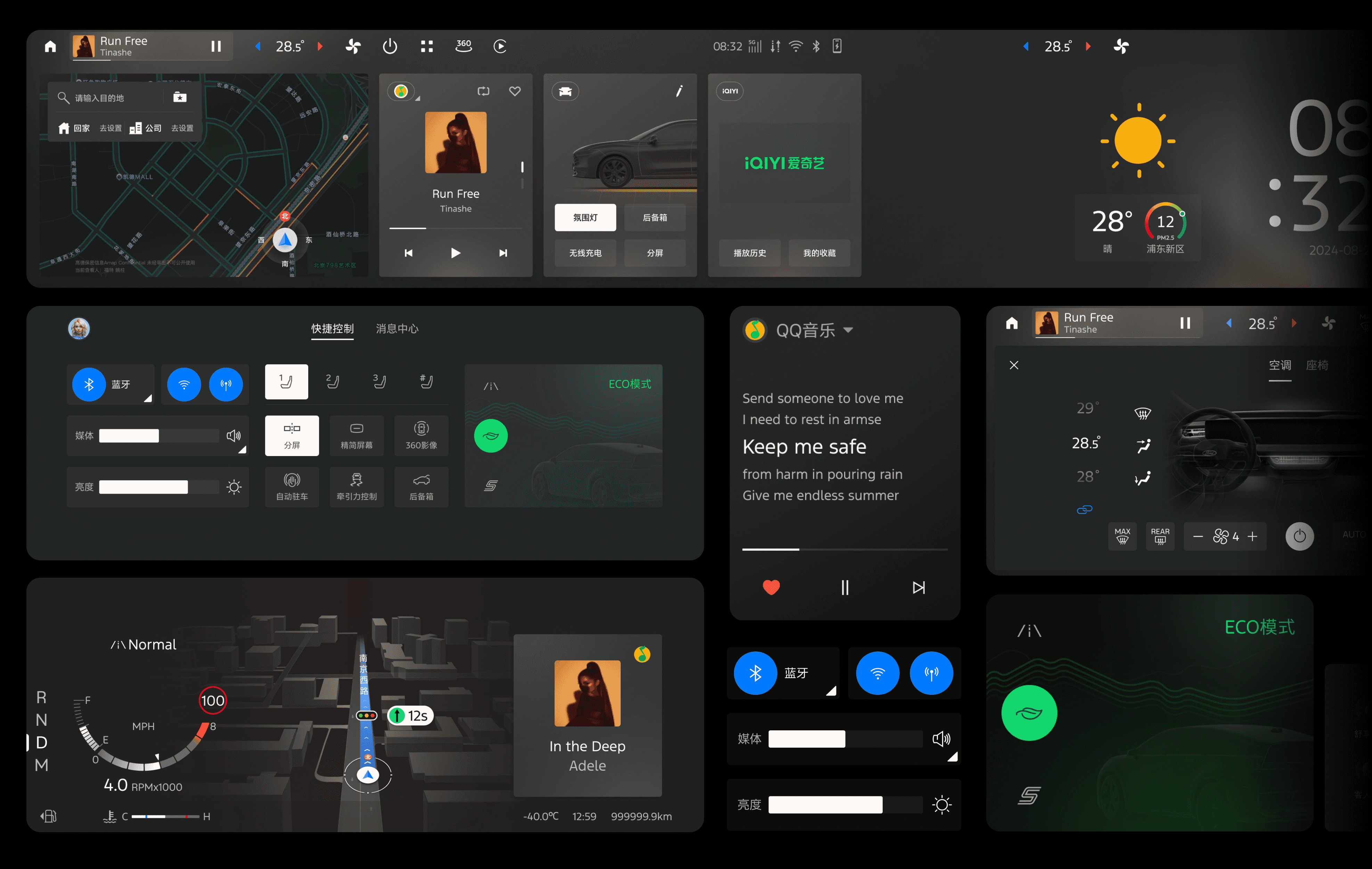
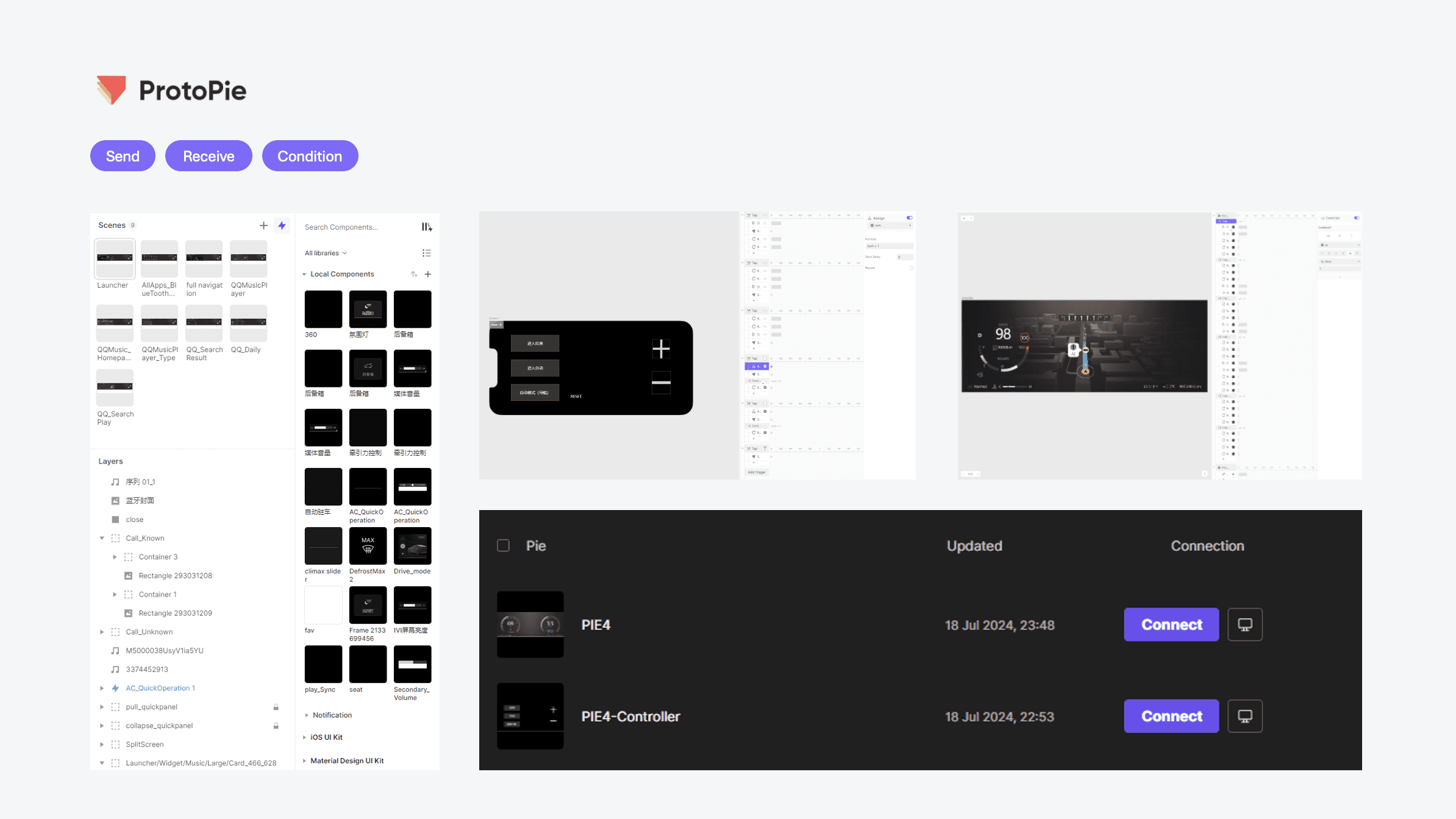
Beyond the static design system, I built nine ProtoPie interactive prototypes for usability validation — full-scenario simulations covering media playback, music search, volume controls with nested audio channels, Bluetooth phone integration, split-screen multitasking, climate controls, navigation with waypoints, and instrument cluster interactions. A separate controller prototype sent signals to simulate incoming calls and driving mode changes.
The prototypes were tested with real users performing real tasks: searching for a song while navigating, adjusting four independent volume channels from a quick panel, taking an incoming call mid-navigation, switching drive modes. Every interaction was timed, every fumble documented, and the findings fed directly back into component refinements before software development began.
Delivered five complete token-driven component libraries (one per screen configuration), a unified UE interaction specification, a full motion design system, and nine validated ProtoPie prototypes — all documented bilingually for Ford's global teams. The visual direction I established became the design standard for the broader Redwood 2.0 infotainment platform across Ford and Lincoln, extending well beyond the initial music module into every surface of the digital cockpit.
Beyond the static design system, I built nine ProtoPie interactive prototypes for usability validation — full-scenario simulations covering media playback, music search, volume controls with nested audio channels, Bluetooth phone integration, split-screen multitasking, climate controls, navigation with waypoints, and instrument cluster interactions. A separate controller prototype sent signals to simulate incoming calls and driving mode changes.
The prototypes were tested with real users performing real tasks: searching for a song while navigating, adjusting four independent volume channels from a quick panel, taking an incoming call mid-navigation, switching drive modes. Every interaction was timed, every fumble documented, and the findings fed directly back into component refinements before software development began.
Delivered five complete token-driven component libraries (one per screen configuration), a unified UE interaction specification, a full motion design system, and nine validated ProtoPie prototypes — all documented bilingually for Ford's global teams. The visual direction I established became the design standard for the broader Redwood 2.0 infotainment platform across Ford and Lincoln, extending well beyond the initial music module into every surface of the digital cockpit.
Outcome
Beyond the static design system, I built nine ProtoPie interactive prototypes for usability validation — full-scenario simulations covering media playback, music search, volume controls with nested audio channels, Bluetooth phone integration, split-screen multitasking, climate controls, navigation with waypoints, and instrument cluster interactions. A separate controller prototype sent signals to simulate incoming calls and driving mode changes.
The prototypes were tested with real users performing real tasks: searching for a song while navigating, adjusting four independent volume channels from a quick panel, taking an incoming call mid-navigation, switching drive modes. Every interaction was timed, every fumble documented, and the findings fed directly back into component refinements before software development began.
Delivered five complete token-driven component libraries (one per screen configuration), a unified UE interaction specification, a full motion design system, and nine validated ProtoPie prototypes — all documented bilingually for Ford's global teams. The visual direction I established became the design standard for the broader Redwood 2.0 infotainment platform across Ford and Lincoln, extending well beyond the initial music module into every surface of the digital cockpit.

©2026 SIQI LIU
Go Back To Top
©2026 SIQI LIU
Go Back To Top